Mobile robots · Primary: EN ISO 12100 + ISO 10218-2
Warehouse and Logistics Robot Compliance
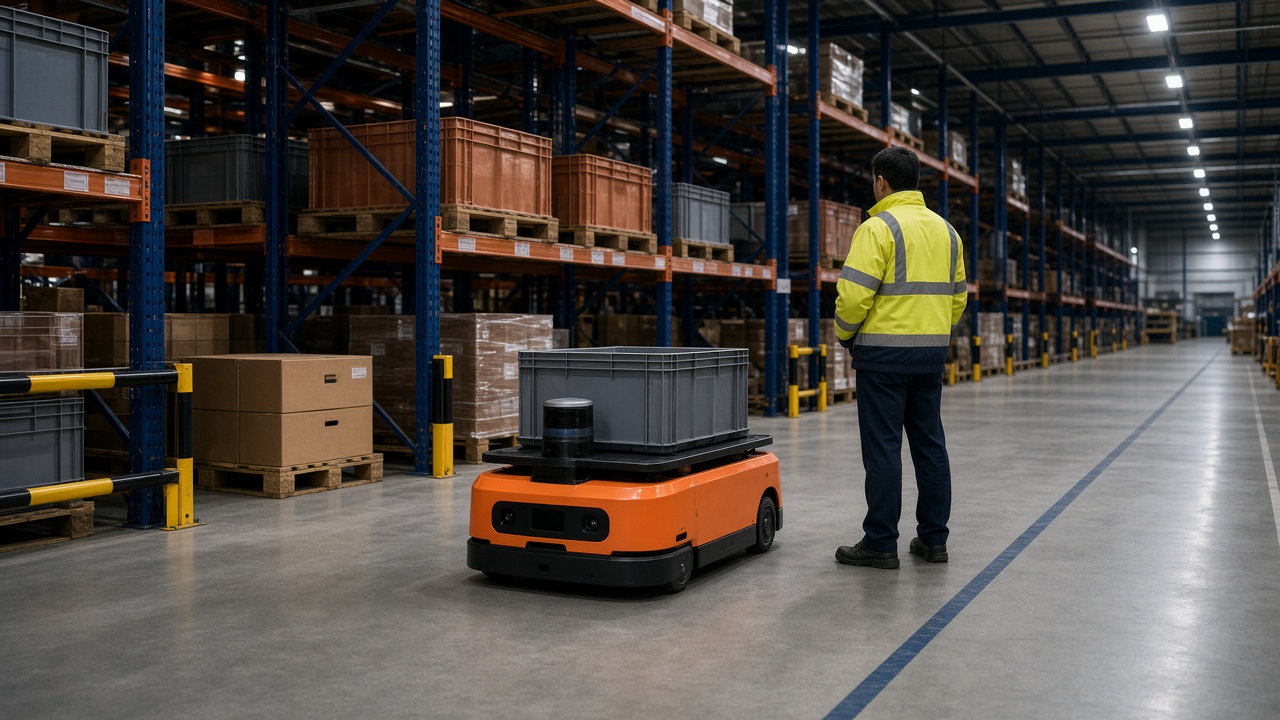
Goods-to-person stations, sortation robots, robotic palletising, and high-throughput intralogistics — where machinery, conveyors, and software meet people at pick faces.
Built for: Warehouse automation integrators, goods-to-person and sortation system builders
 EN ISO 12100 + ISO 10218-2
What this category actually demands
Warehouse systems fail compliance at interfaces: the pick face where a person reaches in, the conveyor transfer, the racking aisle a technician enters. Throughput demos hide all three. Customer safety reviews and EU machinery assessments will find them.
The assessment covers the system as shipped (robots, conveyors, shuttles, WMS/fleet software and manual stations as one machine), with safeguarding by task: normal operation, replenishment, jam clearing and maintenance each have their own protective concept.
Reality check
Where Warehouse & Logistics Robots programs stall
Jam clearing never assessed
The most dangerous warehouse task is unjamming a live system. If the procedure is “reach in carefully”, the design is not finished.
Every component CE-marked, system unassessed
Component marks do not add up to a system declaration. The integrator owns the combined file.
Safety traded away for throughput at commissioning
Scanner fields shortened and speeds raised on site, after validation. Validated parameters are locked into commissioning records and change control.
Safety architecture — Warehouse & Logistics Robots
Safety architecture
Each function below is a claim in the technical file, with a target performance level, an implementation and a validation method.
Task-based safeguarding
Different protective measures for operation, jam clearing, and maintenance — interlocked and mode-aware.
Pick-face protection
Presence sensing and ergonomic design at goods-to-person stations.
Conveyor & transfer interlocks
No reachable hazard at handover points between robots, conveyors, and people.
Software change control
WMS/fleet changes screened for safety impact before they reach the floor.
Scope: concept to site acceptance
Four stages. Design authority stays with the manufacturer; Hazloc Labs manages compliance through labs, assessors and customer EHS reviews.
Gate 1
Domain & classification
Where it operates, who is exposed, which laws and type-C standards apply, before any test is booked.
Gate 2
Risk & safety architecture
ISO 12100 assessment turned into safety functions with PL/SIL targets for controls implementation.
Gate 3
Validation
Measurements and tests on the real configuration — payload, speed, workpiece, ground — that close each safety claim.
Gate 4
File & acceptance
Technical file, DoC/DoI, instructions, and the site/customer acceptance pack, with change control that keeps it valid.
What you receive
- System-level hazard analysis (cell + conveyor + software)
- Safeguarding & access strategy for operators and maintenance
- Throughput vs safety-function trade-off documentation
- Integration test & validation records
- Operator / maintenance instructions and residual risks
Standards, in context
Applicable editions and clauses follow from product classification and target markets — EU Machinery Regulation (EU) 2023/1230, UK machinery rules, or North American OSHA/ANSI expectations, layered with EMC, electrical, radio, and battery law where your product triggers them.
Go deeper: Warehouse & logistics robots: system-level compliance →
| EN ISO 12100 | Machinery risk assessment |
| EN ISO 10218-2 | Robot systems and integration |
| EN 619 / EN ISO 3691 (as applicable) | Conveyors / industrial truck interfaces |
| EN ISO 13849-1 | Safety-related control systems |
| EN IEC 60204-1 | Electrical equipment of machines |
Warehouse & Logistics Robots FAQ
Who certifies a warehouse system built from many OEM parts?+
Whoever places the integrated system on the market / puts it into service as machinery — typically the integrator — owns the final file and declaration.
Book a scoping call
30-minute call covering operational domain, applicable standards and evidence gaps, at any stage from concept to customer audit.
Book Free CallKeep exploring Robotics
All Robotics →Mobile robots
AMRs — Autonomous Mobile Robots
Free-navigation mobile robots for factories, warehouses, hospitals & intralogistics fleets.
Mobile robots
AGVs — Automated Guided Vehicles
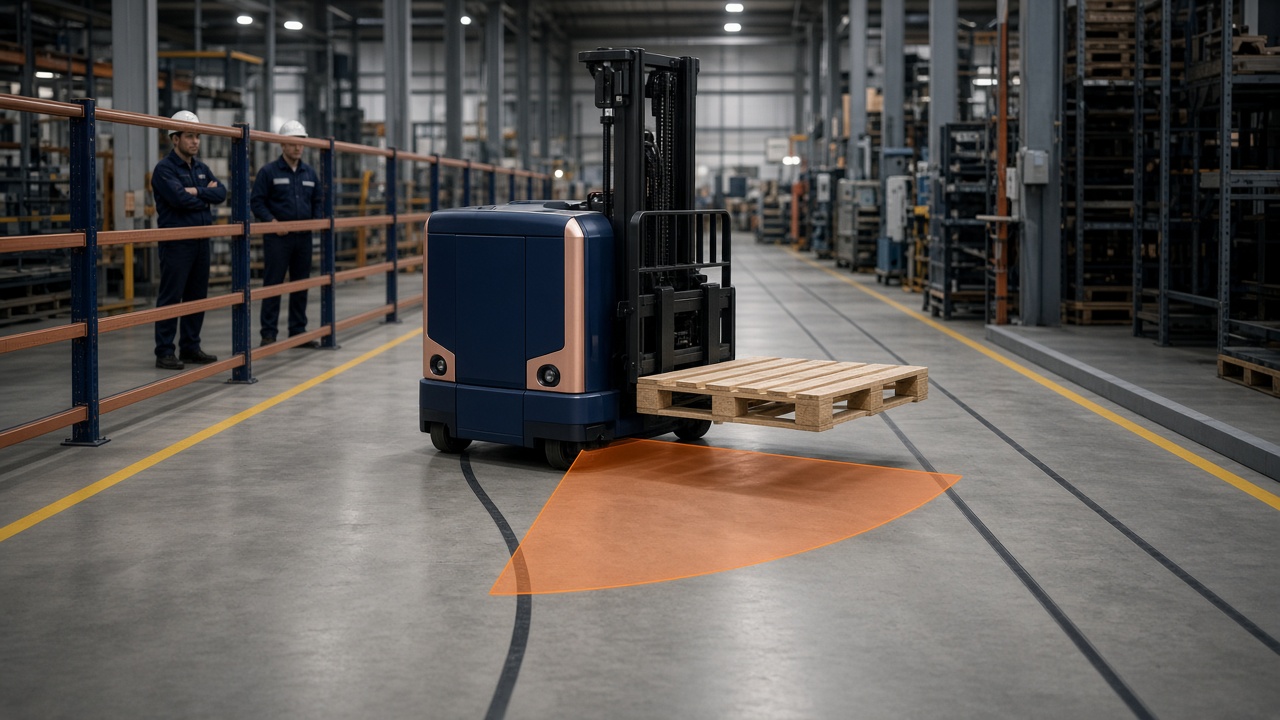
Guided vehicles, automated forklifts & tuggers on defined paths — guidance, load & plant interfaces.
Mobile robots
AGVs & AMRs
Driverless industrial trucks, AMRs, and automated guided vehicles for factories and warehouses.