
Mobile robots · Primary: ISO 3691-4
AMR Safety and Compliance
Autonomous mobile robots that navigate freely among people — ISO 3691-4 person detection, protective fields, fleet behaviour, and battery/charging evidence for EU, UK, and North America.
Built for: AMR OEMs, fleet software teams, and integrators deploying in factories & warehouses
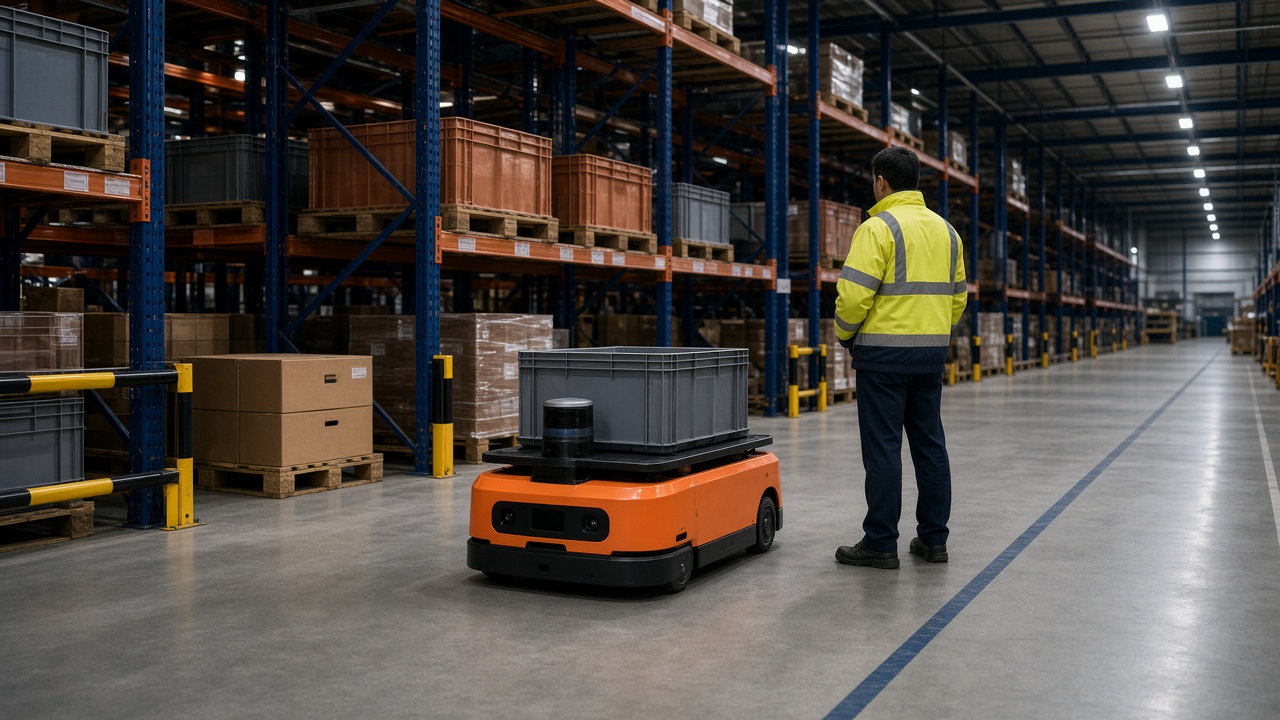 ISO 3691-4
What this category actually demands
An AMR is not a slower forklift with better software. It makes navigation decisions in spaces shared with people, forklifts, and racking — so regulators and site EHS teams will ask how it detects a person, how it stops, what it does when localisation degrades, and who owns the route it was validated on.
The AMR safety case is structured the way a Notified Body, an NRTL field evaluator or a customer EHS review reads it: operational domain, then protective functions, then evidence. The ISO 3691-4 assessment, fleet-manager behaviour, charging and battery file form one consistent safety case.
Reality check
Where AMRs — Autonomous Mobile Robots programs stall
“The scanner is certified, so we’re covered”
A certified safety laser scanner is a component. Protective-field sizing, muting, speed control, and stopping distance on your vehicle, at your payload, on your floor — that is the system claim you still have to validate.
Routes change after validation
A new aisle, a reflective surface, a seasonal layout change. If route and map changes are not in change control, your validated protective fields quietly stop matching reality.
Fleet manager treated as “just software”
Traffic rules, remote stop, and zone speed limits in the fleet layer are safety-relevant. Scope identifies which fleet functions carry safety claims and which must never be able to defeat them.
Safety architecture — AMRs — Autonomous Mobile Robots
Safety architecture
Each function below is a claim in the technical file, with a target performance level, an implementation and a validation method.
Person detection & protective fields
Field sets sized from stopping distance at max speed + payload, with muting/blanking justified — never copied from a demo route.
Safe speed & steering control
Speed monitored against field state and load; steering/braking faults lead to a defined safe state.
Localisation loss behaviour
What the vehicle does when LiDAR/vision confidence drops is a designed behaviour, tested — not an exception log.
Charging & battery safety
Opportunity charging, battery swapping, and thermal events handled in the risk assessment and depot instructions.
Scope: concept to site acceptance
Four stages. Design authority stays with the manufacturer; Hazloc Labs manages compliance through labs, assessors and customer EHS reviews.
Gate 1
Domain & classification
Where it operates, who is exposed, which laws and type-C standards apply, before any test is booked.
Gate 2
Risk & safety architecture
ISO 12100 assessment turned into safety functions with PL/SIL targets for controls implementation.
Gate 3
Validation
Measurements and tests on the real configuration — payload, speed, workpiece, ground — that close each safety claim.
Gate 4
File & acceptance
Technical file, DoC/DoI, instructions, and the site/customer acceptance pack, with change control that keeps it valid.
What you receive
- Operational domain & route validation plan
- Protective-field & stopping-distance validation
- Fleet safety-function scoping
- Battery / charger evidence pack
- Technical file, DoC & site acceptance pack
Standards, in context
Applicable editions and clauses follow from product classification and target markets — EU Machinery Regulation (EU) 2023/1230, UK machinery rules, or North American OSHA/ANSI expectations, layered with EMC, electrical, radio, and battery law where your product triggers them.
| ISO 3691-4 | Driverless industrial trucks and their systems — safety |
| ANSI/RIA R15.08-1 | Industrial mobile robots — safety (North America) |
| EN ISO 13849-1 / IEC 62061 | Safety-related control systems |
| EN ISO 12100 | Risk assessment and risk reduction |
AMRs — Autonomous Mobile Robots FAQ
AMR or AGV — which assessment applies?+
Free navigation points to AMR expectations under ISO 3691-4 / R15.08; defined guidance is the AGV pattern. Many fleets need both analyses by vehicle type.
Does the fleet manager need assessing?+
Where fleet logic carries safety claims (zones, speed, remote stop), yes — scoped precisely so non-safety traffic optimisation stays out of the safety case.
Book a scoping call
30-minute call covering operational domain, applicable standards and evidence gaps, at any stage from concept to customer audit.
Book Free CallKeep exploring Robotics
All Robotics →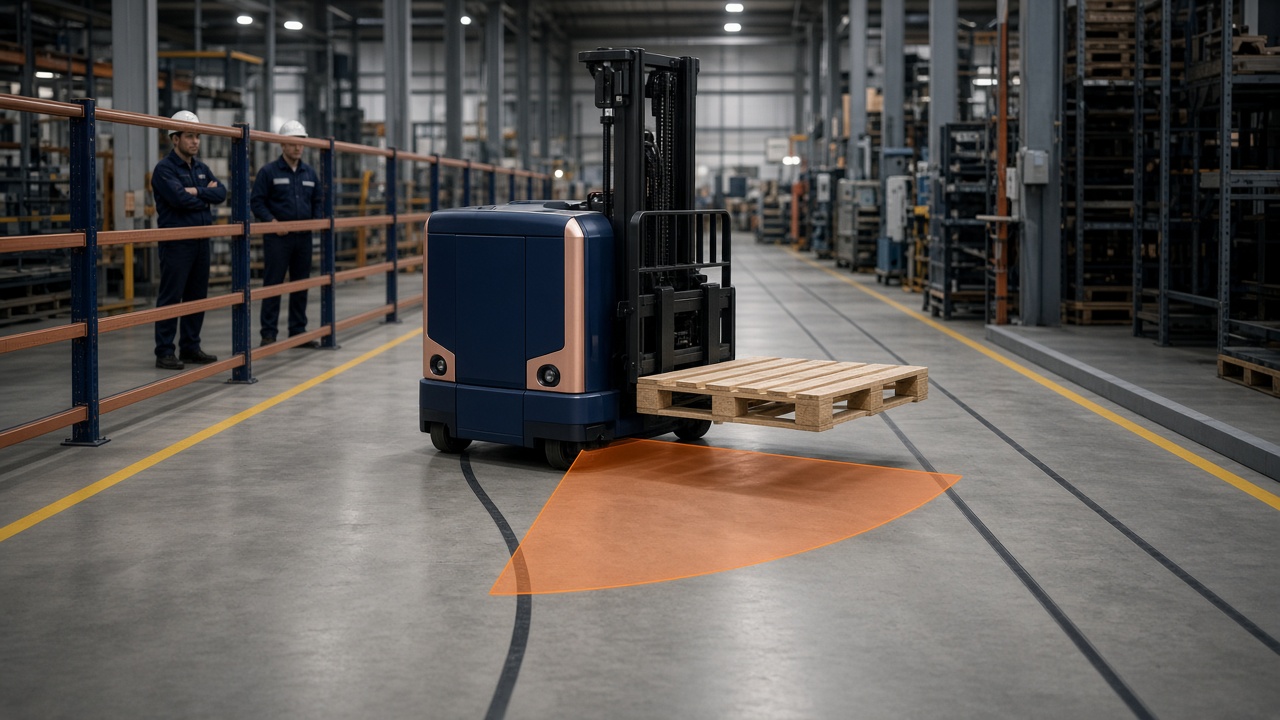
Mobile robots
AGVs — Automated Guided Vehicles
Guided vehicles, automated forklifts & tuggers on defined paths — guidance, load & plant interfaces.
Mobile robots
AGVs & AMRs
Driverless industrial trucks, AMRs, and automated guided vehicles for factories and warehouses.

Mobile robots
Mobile Manipulators (MoMas)
A mobile base plus a robot arm — combined navigation, manipulation, and collaborative risks.