
Mobile robots · Primary: ISO 10218-2 + ISO 3691-4
Mobile manipulator (MoMa) compliance, base + arm as one system
When a cobot or industrial arm rides on an AGV/AMR, neither certificate alone covers the combination. We assess the integrated system: stability, combined stopping, and task-level safeguarding.
Built for: MoMa builders, cobot-on-AMR integrators, and machine-tending automation teams
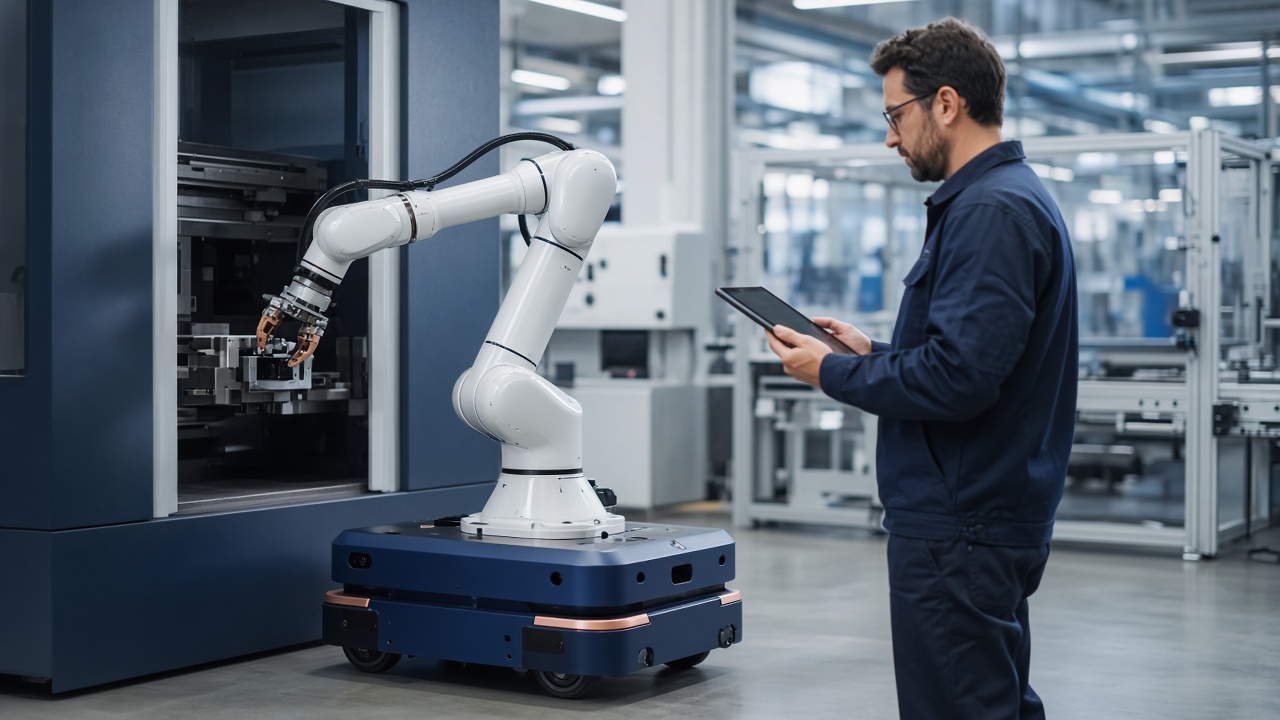 ISO 10218-2 + ISO 3691-4
What this category actually demands
Put a robot arm on a mobile base and you have created a new machine. The base OEM never assessed tip-over with the arm extended at height; the arm OEM never assessed a gripper moving through a shared aisle at travel speed. The combined hazard set belongs to whoever integrates and places the MoMa on the market.
We define that integrated system properly — modes for transport, manipulation, combined motion, docking and charging — then allocate safety functions across both controllers so a fault in one cannot be masked by the other.
Reality check
Where Mobile Manipulators (MoMas) programs stall
Two DoCs stapled together
Base and arm declarations are inputs. The integrator still owes the combined risk assessment, stability case, and final DoC.
“Collaborative” by arm brand
A force-limited arm on a moving base is not automatically a collaborative application. Base motion, workpiece, and gripper change the contact analysis completely.
Stability checked in one pose
Worst case is rarely arm-down centred. Extended, raised, loaded, turning, on a slope threshold — that envelope is the test matrix.
Safety architecture — Mobile Manipulators (MoMas)
The safety architecture we build with you
Every function below ends as a claim in your file — with a target performance level, an implementation, and a validation method. If one of these is missing for your product, that is where we start.
Mode management
Transport / manipulation / combined modes with different speed, field, and force limits — selected and indicated unambiguously.
Stability envelope
Arm pose + payload + base dynamics bounded by monitored limits, not operator discipline.
Combined stopping
Base braking and arm deceleration validated together, workpiece included.
Cross-controller safety
STO/SLS allocation so base and arm faults propagate to a safe state in both.
How we help — from first sketch to site acceptance
One path, four gates. You keep design authority; we own the compliance thread through labs, assessors, and customer EHS reviews.
Gate 1
Domain & classification
Where it operates, who is exposed, which laws and type-C standards actually apply — before any test is booked.
Gate 2
Risk & safety architecture
ISO 12100 assessment turned into safety functions with PL/SIL targets your controls team can implement.
Gate 3
Validation
Measurements and tests on the real configuration — payload, speed, workpiece, ground — that close each safety claim.
Gate 4
File & acceptance
Technical file, DoC/DoI, instructions, and the site/customer acceptance pack, with change control that keeps it valid.
What you receive
- Integrated-system boundary definition (base + arm + tooling)
- Combined risk assessment & stability analysis
- Safety-function allocation (STO, SLS, monitored stop)
- Validation plan for navigation + manipulation modes
- DoC / DoI strategy for base, arm, and integrator roles
Standards, in context
These are starting points, not a shopping list. The applicable editions and clauses follow from your classification and markets — EU Machinery Regulation (EU) 2023/1230, UK machinery rules, or North American OSHA/ANSI expectations, layered with EMC, electrical, radio, and battery law where your product triggers them.
Go deeper: Mobile manipulators (MoMas): compliance for base + arm systems →
| EN ISO 10218-1 / -2 | Robot and robot system safety |
| ISO/TS 15066 | Collaborative operation (application-specific) |
| ISO 3691-4 | Driverless industrial truck / mobile base safety |
| EN ISO 13849-1 | Safety-related parts of control systems |
| EN ISO 12100 | Risk assessment for the integrated machine |
Questions we hear from Mobile Manipulators (MoMas) teams
Can we reuse the arm OEM and base OEM files?+
As evidence, yes — but the integrator placing the combined MoMa on the market owns the integrated risk assessment and final declaration.
Is a MoMa automatically collaborative?+
No. Collaborative operation is a validated application mode, not a product label. Speed, force, workpiece, and base motion all matter.
Bring us your project — at any stage
Sketch, prototype, or a customer audit next month. A 30-minute scoping call maps your domain, standards, and evidence gaps.
Book Free CallKeep exploring Robotics
All Robotics →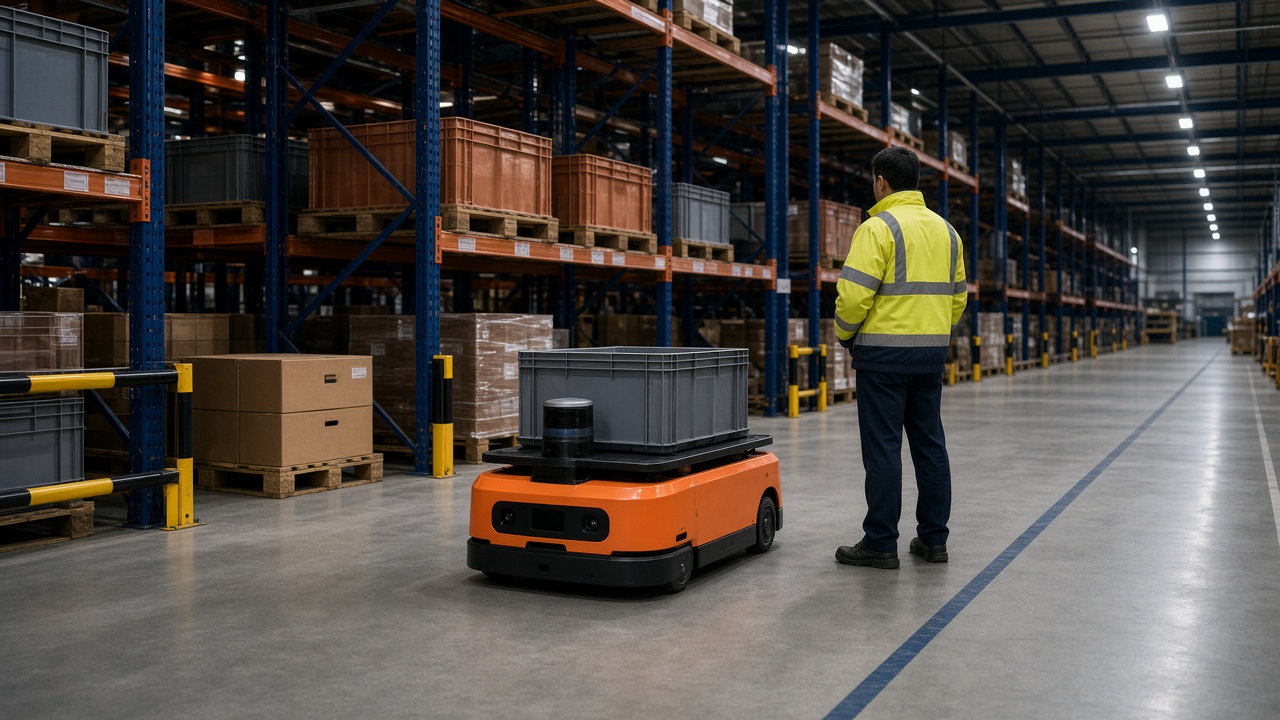
Mobile robots
AMRs — Autonomous Mobile Robots
Free-navigation mobile robots for factories, warehouses, hospitals & intralogistics fleets.
Mobile robots
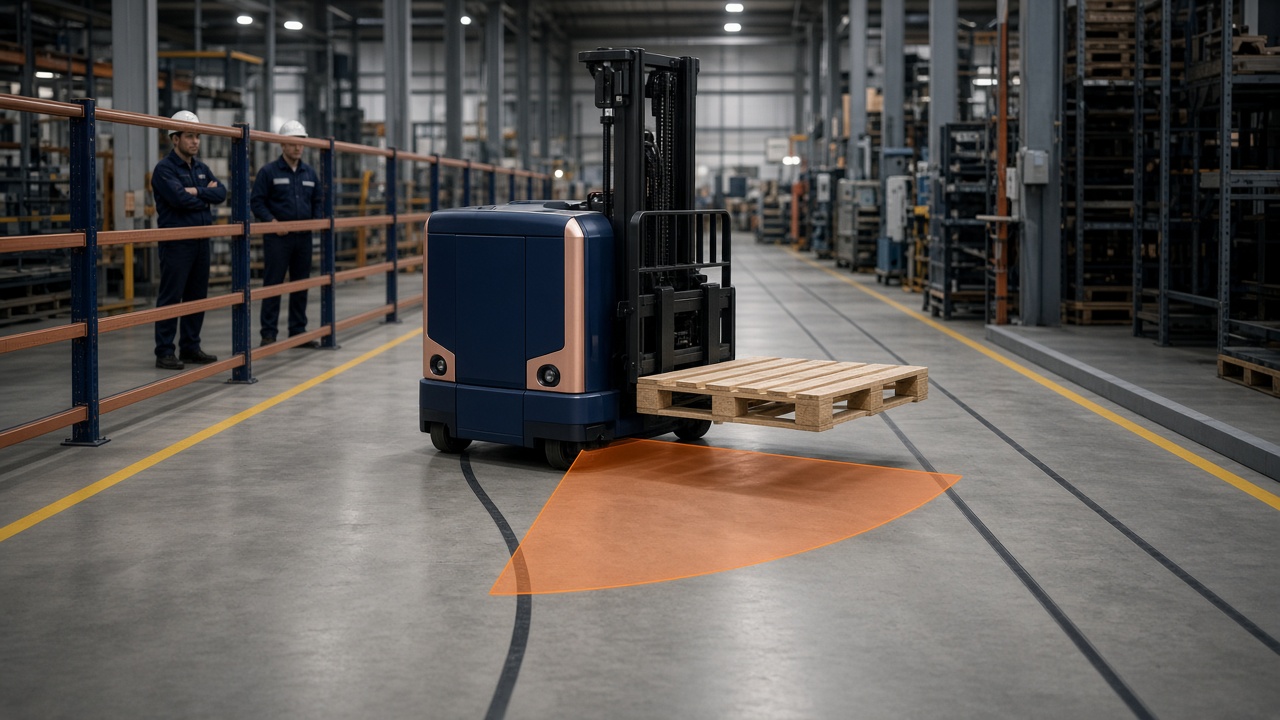
AGVs — Automated Guided Vehicles
Guided vehicles, automated forklifts & tuggers on defined paths — guidance, load & plant interfaces.
Mobile robots
AGVs & AMRs
Driverless industrial trucks, AMRs, and automated guided vehicles for factories and warehouses.